Posts about cyberspace and liberty. Free software, privacy, technology, copyright/copyleft, our digital rights, and whatever concerns us in the digital age.
I don’t know how common is this around the world but I’ve recently been to a lot of restaurants where they’ve stopped giving people a physical menu! Now I see QR codes everywhere where I have to scan to see the menu.
I’d like to see myself as a tech guy but this is nonsense. Give me the menu. I don’t want to scan some QR code or be forced to give away my phone number so I can order some coffee or eat some cake.
Maybe I don’t have a smartphone, maybe I don’t have cellular or Wi-Fi connection, or maybe I simply don’t want to scan some random code in a random place and visit a random web site. And I was almost tolerating all of that until I was told that some cafes and restaurants force people to sign up on a third-party web site to get the menu and they are forced to pay online for the meals.
It’s wrong at every level. I want the printed menu. Maybe some people are fine with this or even like it but I’m not and I’m pretty sure there are a lot of people like me so even if you’re doing this privacy-violating menu thing, have some printed normal menus so concerned people like me can eat. We pay you too, you know?
OpenAI says it’s ‘impossible’ to create AI tools like ChatGPT without copyrighted material . While corporations are doing everything they can to restrict people from downloading or using anything copyrighted and refuse to release stuff under free licenses , they want us to wave all our rights so they can re-sell (and more importantly impose their proprietary licenses) to us what we already own.
People are still being fined, sued, and threatened by various punishments for simply downloading a 20-year-old movie yet are expected to provide their material to these giant corporations for free and even if they don’t, they can’t do anything about it as we see thousands (or millions) of examples of copyright violations by these corporations and copyright infringements every single day regarding AI training.
It begs the question that what privacy and data regulators are doing about this and how people can protect themselves from these data-hungry violators. I’m amazed about how advanced and intelligent computers and programs have become but I care more about my rights than a computer program being able to replicate people’s material, manipulate them and create something (supposedly and allegedly) new.
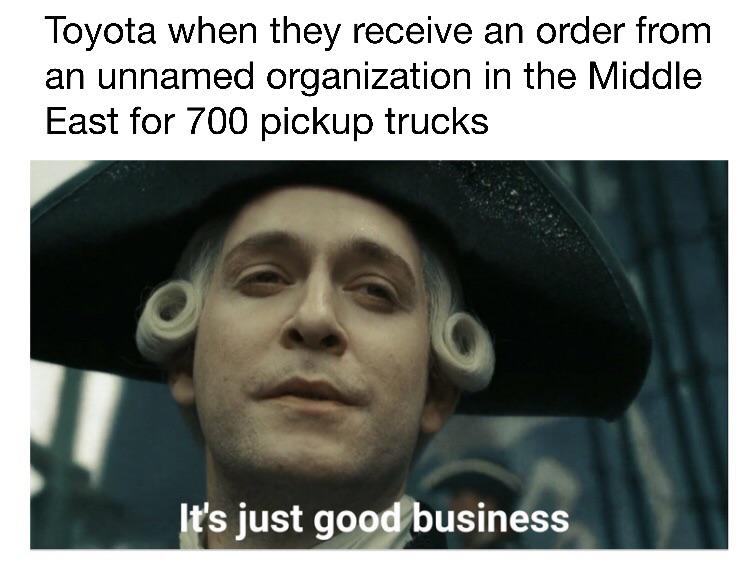
Telegram CEO Pavel Durov is arrested in France over allegations that his platform enabled terrorists, CSAM, money laundering, fraud, etc. Since I heard the news, I couldn’t stop thinking about these memes:
Quote
I want Al to do my laundry and dishes so that I can do art and writing, not for Al to do my art and writing so that I can do my laundry and dishes.
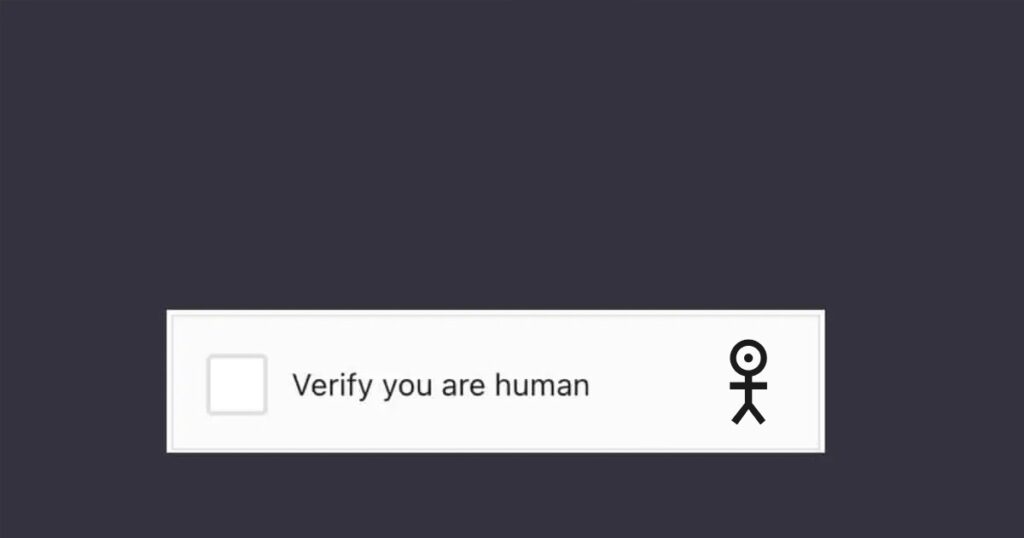
Wouldn’t it be nice if we could have captcha on us? Like when people want to interact with us, we would make them solve the captcha. Are you human enough? They would be forced to answer it with real answers.
Human Captcha: Verify you are human enough
A list of random questions would be presented to people:
Are you racist?
Are you sexist?
Are you a bigot?
Do you support fascists?
Do you support terrorists?
Have you ever discriminated against a group of specific people?
Do you respect people’s privacy?
Are you a cheater or a betrayer of trust?
Are you a professional liar?
Do you secretly do what you preach against?
Are you a snob?
Are you trying to interact only to use me for some benefit?
These are just few questions I had in mind. Wouldn’t it be nice if we could present people with this kind of captcha?
I’ve recently come across a lot of posts questioning data and privacy regulations. What is more common among them to describe privacy regulation as failed or worthless is that the dis-services we might use need that data to function.
That is far from truth. No flashlight app needs to access my contact list. No shopping site needs access to my microphone. No museum needs to know where I’m precisely located to show me a famous painting. Privacy regulation is exactly for that.
Privacy regulation is not there to make sites dysfunction, it’s there so the site won’t sell my personal information to data brokers. It’s there to make sure my privacy won’t be violated solely because I bought a new mobile phone.
My privacy is valuable to me and it should be protected. Regulation is there to protect my rights while also giving you a choice. You can consent to data collection and I can tell the dis-service to not to do so. It’s a choice, much like free speech.
I want my freedom of expression no matter what. Now I can choose to say something or be quiet but I want this right to be protected. Much like that, data should be regulated so you can choose to share it or not and also reverse the choice if you change your mind.
EU, no matter what some people might say, is the leading continent on protecting its people regarding data and privacy and I admire their work. It might not be complete, it might need a lot of work to be as good as it needs to be, but their work is nonetheless admirable.
Privacy and data should be protected, regulated, and violators should be punished. It’s the way it should be and I hope it’s the direction all countries take. We should force our lawmen to follow that route and we should help them with civil protests against violators of our privacy.
Specially now, that free (as in freedom) tech had a lot of progress and made it possible for people to experience same experiences and technologies without being forced to give away their personal information to giant corporations and data brokers.
More I grow up, more I realize I choose my tech to fulfill my needs. not to use features the tech just gives me. I won’t suddenly feel a new need because an app or device has it. New technologies are often designed and made in a way to manipulate you into using them and I choose to resist that.
That is one reason I use free software . Free software is about freedom and that’s what gives me choice and lets me do my computing how I decide. Computer user freedom is about letting people decide how their computers and programs work and being able to change them to make sure it does what we ask them. Plus, we can distribute our copies (including copies of our modified programs) so we can help others as well.
It’s not that we always change or modify programs, I won’t change anything most of the times, but it’s about our rights. Think of software freedom in the way you think about freedom of speech. We may not have something to say but we certainly would like to have the freedom just in case.
Free software is the practical answer to our computing needs. It’s a right and it should be default way of computing. Computer user freedom makes sure that you’re in charge. It makes sure that the program won’t seduce you or create new needs, it just does what you ask it to do. It will satisfy your current needs, and nothing more. If you need a feature, it can be implemented in it, by anyone you decide. Most of the times the developers update programs so you won’t need to do anything but if the developer doesn’t upgrade or implement something, you can do it yourself or ask someone to do it for you.
Free software won’t manipulate you to do something, it won’t create new needs for you. If it does, you will have the ability and total power to modify it to stop doing that. Free software is all about empowering users over their computers and programs. It’s about putting you in control of what you own.
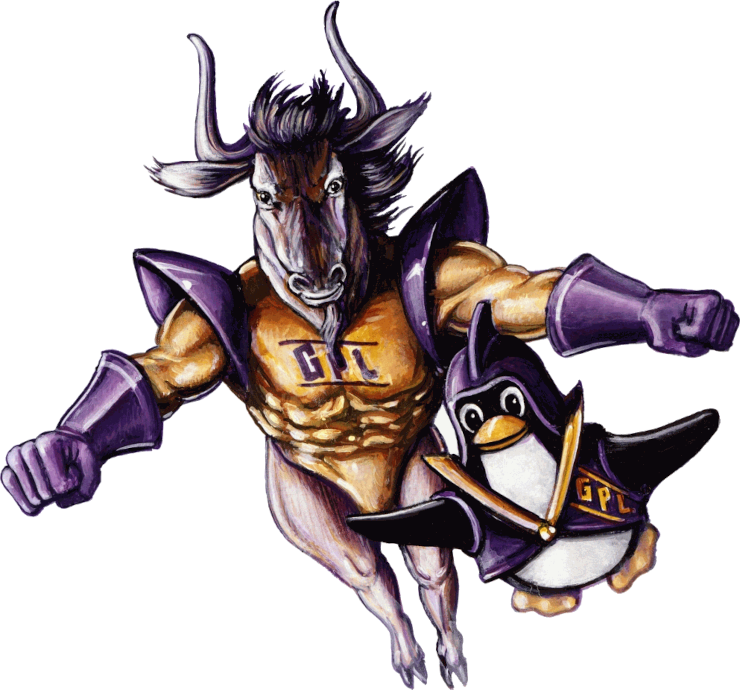
Free software is that superhero that won’t decide good and bad for you, it only puts you in power to decide for yourself. It’s that superhero that prevents the greater harm, which in this case is digital slavery, and puts you in charge of your own computing.
Using computer programs such as VLC media player is very normal. Millions of people use it daily without ever thinking it’s a weird tool or player or even thinking what’s behind it. It’s one of the best media players we could ask for and is published under a GNU General Public License .
The quality of the media player is so high, people just install and use it. Unfortunately, the qualities and features of many other free (as in freedom) programs are not considered when people choose their software. Windows, the malicious freedom and privacy-violating operating system from Microsoft, is the dominant OS on personal computers and Android filled with proprietary programs and components is the dominant OS on mobile phones.
The quality of GNU operating system with Linux kernel is very high. The features, the freedom, the usability, the community, and many other factors to consider are all voting that GNU should be the normal operating system when people try to choose. However, the publicity of Microsoft and the resources, power, and tools it has made it the dominant OS.
Even though Microsoft violates users’ privacy and freedom everyday, in bright daylight, it is still one of the main two default choices people consider, along with other proprietary malicious operating system published by Apple.
It is like this because people consider it the normal. No matter how wrong it is, people choose it because it’s the normal way of computing for people. We, the free software community, should change that.
We should change the normal way of computing by educating people that using a computer should not be equal to losing your privacy. We should teach people that using a computer is not equal to losing your freedom. We should teach them that a computer should do as the user wishes, not vice versa. It is the computer that should be under the person’s command, and it should be the normal.
The normal should be:
Users can run programs as they wish, for any purpose.
Users are free to study how the programs work, and be able to change it so it does what the user wants.
Users be free to redistribute copies of the program.
Users be free to redistribute the copies of their modified versions.
And it is what computer user freedom means. It is what should be the normal for people. It is not only about the GNU operating system (or as many may may call it, Linux — which is a kernel), it’s every piece of program a computer user runs. Freedom is not conditional is situational. One should always be free from proprietary software.
It’s like free speech. It’s not that we always have something to say, it’s that we always should be free to speak. Computer user freedom, or software freedom, is not about always changing everything, it’s about having the right and power to change what we believe is wrong or is not suitable for us.
Computer user freedom is not the normal we have today. Running GNU+Linux on your computer is still odd for many people, and we should change that. People already use a lot of free (as in freedom) programs daily. VLC media player is one of them. Many proprietary programs use free components.
And it’s not like you have to be a computer expert to be able to use a free operating system or program, believe me, I know so many people who use them daily with no problem and they’re not even a computer power user.
We should change the normal. It shouldn’t be normal to sacrifice your privacy and freedom to be able to use your computer and we can achieve the new normal, the correct, humane, people-focused, and right normal through education, good publicity, hard work on usability and user experience (UX), and consistent work on improving our user interfaces and adopting them for daily users.
It’s never late to start, specially for a good purpose like our mission.