
Thoughts & Findings
December 25 is the birthday of Isaac Newton. On this day, we celebrate the existence of comprehensible physical laws and we call it Newtonmas or Grav-mass. (2025-12-25 Update: I was today years old when I found out that Newton’s birthday is on December 25 Julius calendar; on current Gregorian calendar his birthday is on January 4th.)
The name Newtonmas can be attributed to The Skeptics Society , which needed an alternative name for its Christmas party.
Celebrants send cards with “Reason’s Greetings!” printed inside, and exchange boxes of apples and science-related items as gifts. The celebration may have had its origin in a meeting of the Newton Association at Christmas 1890 to talk, distribute gifts, and share laughter and good cheer.
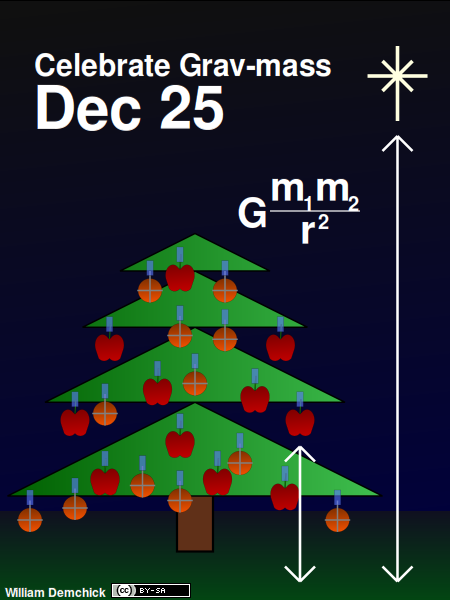
One other way to celebrate Grav-mass is to decorate a tree with apples and other fruits. Glue them or attach them, but not too well! The idea is that occasionally a fruit should fall.
Another way to celebrate Grav-mass, in a group, is by telling each other about scientific knowledge and understanding, or discussing what kind of experiment could answer an unresolved question about the world.
Newtonmass can be celebrated by anybody who loves science and wants to have a reason for a celebration. It’s not exclusive to any specific group or belief.
ACAB (All Cops Are Bastards) is an acronym used as a political slogan associated with dissidents who say they are subjected to political persecution and police brutality. ACAB is also one of the main slogans of anarchists.
I’ve seen a lot of discussion about the acronym ACAB (and 1312) recently. People are arguing that not all cops (blue pigs) are bad, which is true, but that’s not what we’re saying.
First of all, we don’t say all cops are bad, we say All Cops Are Bastards. We don’t mean bastard as an unpleasant or despicable person. Bastard is taken from the word bastardize meaning corrupt or debase.
Cops are inherently corrupted in two ways:
First is that they are corrupted by the possessions of power. They can use their authority to inflict power on people.
The second and the most important reason on why all cops are bastards is because the very laws that they are trying to enforce are corrupt and they are used to subdue different identities and minorities.
So cops can be corrupted by their power and cops are corrupted by the laws they enforce; All cops are corrupted, All Cops Are Bastards.
Now that this is clear, let’s have another example. Imagine you’re in a hospital getting ready for a surgery. A nurse comes to you and says most of our surgeons are very well educated, it’s just a few who don’t have a degree and will kill you.
Or, you’re in an airport buying a ticket and the person behind the counter tells you most of our pilots are very well trained, it’s just a few who don’t have any training and will crash the plane and kill you.
It doesn’t make sense, right? Because everybody in those industries must be well trained and educated, because it’s the life of people that is in the matter. We can’t afford to have a few bad jobs there, everything must be perfect.
That is the same thing with cops and law enforcement. Most of cops being good is not enough. It’s either all of them be good or the whole system be corrupt. Doesn’t matter if most of them do their job very well, it’s those few who kill people and abuse power.
The system that is bringing these into power is corrupt so we can’t take a chance or run numbers. People are not numbers, people are living beings. If a system is corrupt, all of those who are in that system, all of those who are subscribed to that system are corrupt, whether they like it or not.
When we say ACAB, we’re not trying to offend anybody, we’re stating the fact that the system is corrupt and it should be dismantled from power. So, stop making excuses for cops and try to reform, rebuild the system in a way that is fixed and can’t be corrupted.
With rising concern about privacy violations and security issues of computer technology giants like Big Tech , companies and products are now advertising for themselves using the term end-to-end encryption to mislead users.
I’ve always said that end-to-end encryption only works if you’re in control of the encryption secret/public keys, not the product/company. Sadly, many fall into the false claims of tech giants about privacy.
This week, Texas Attorney General filed a lawsuit [PDF ] against Google in which it explains that Google has accesses encrypted messages sent and received by WhatsApp, The Register has reported .
End-to-end encryption supposed to eliminate the ability of middle-man or messaging servers/companies to read the message. Now, if we don’t control our encryption keys and rely on keys that are controlled by the company (messenger provider), there’s no difference with no encryption at all.
Messengers like Facebook Messenger, WhatsApp, Google stuff, etc. are not safe, even with encryption because the company is controlling the keys, thus can read and share our messages, encrypted or not.
I always have suggested libre decentralized messaging software like Matrix and XMPP which can be self-hosted and secured with true end-to-end encryption.
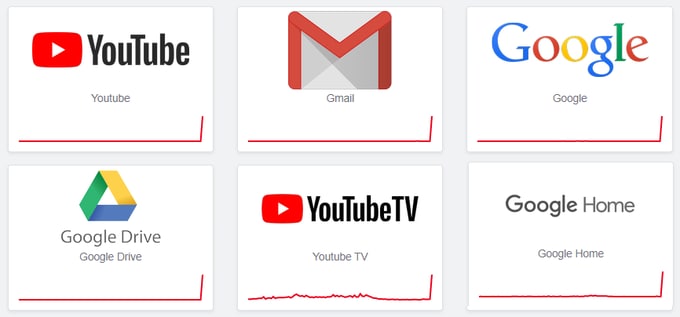
Various Google products, including Gmail, YouTube, Google Maps, and Google Calendar are facing global outage . Any service that requires a Google Account to enable features is currently down.
This is a good reason to get away from Google and move to a decentralized libre service such as Nextcloud. Using a libre decentralized platform prevents this kind of outages.
A decentralized service can be down too but unlike Google stuff (and similar products), if an instance goes down, only people on that instance will be affected, not the whole network.
For example, more than 2 billion people use G Suite, which includes Google Calendar, Google Drive, Google Docs, Hangouts, etc. and with this outage, all of them are unable to use these products.
But a decentralized service doesn’t affect 2 billion people at once. People use different instances on different servers and many of them can continue using their services.
And also, a decentralized libre service gives you ability to choose the server you want to run the service on, along with the option to use instances running by other people. This way, you can make sure the server won’t surprise you or put you in trouble.
One thing that drives me crazy is that it is assumed that everyone has one of those surveillance machines named mobile phone. Many online products or even offline ones are asking for a mobile phone number that receives text messages and can be used for digital communication therefore surveillance.
And most of those services, products, or places don’t work or compute when one does not have that machine.
In a result of that, now many people have a mobile phone carrying around. Simply because life is now dependent on this machine, people are facing this kind of surveillance.
We worry about Big Tech and their friends putting us under their surveillance domain but many don’t even think about surveillance using sim cards or cellular data.
Many of us simply don’t have a choice. You see, if we don’t carry a mobile phone with us, life becomes almost impossible so we decide (or forced) to have one. Now, the bigger injustice, the bigger problem is that many companies are now selling a small computer as a mobile phone and they name it smart phones.
Smart phones are simply computers in a smaller form. Our desktop computer can do many things but this kind of computers, named smart phones, give us ability to do our computing and at the same time have a cellular connection and use it as a phone.
What makes it not good is that almost all of these smart phones are running nonfree software. A free (as in freedom) software (or software libre) lets you to be in control of your own computing. A libre program does what you want, however, a nonfree program forces you to do what it wants.
Being forced to have a mobile phone to be able to live your normal life is injustice and being forced to own a so-called smart phone makes it worse. One should be able to live one’s life without being forced to be under surveillance. One should be able to receive services without one’s privacy and freedom (both digital and non-digital) being violated. One should be able to live without this injustice being forced to one.
Lisa Montgomery is on death row and she is waiting for 2021 January 12 for her sentence to be executed. Execution is murder and nobody, with no reason, deserves to die. Execution doesn’t make society safe, and it certainly is not a fair sentence.
Death is a brutal sentence. Ms. Montgomery was the victim of an extreme level of physical and sexual abuse throughout her life against which the state never provided protection and for which it failed to offer remedies.
Now, as Trump administration moves forward with a federal killing spree in the lame duck period, a group of United Nations rights experts on Thursday urged the U.S. government to halt the planned execution of Lisa Montgomery—a convicted murderer who suffered horrific abuse throughout her life.
She would be the first woman to die by federal execution in nearly 70 years. She’s been described as “profoundly mentally ill” and “the most broken of the broken.”
In their joint statement, the special rapporteurs and other human rights experts say Montgomery was repeatedly “betrayed” by state authorities, pointing in part to her legal defense that failed to adequately address her mental health.
“Ms. Montgomery was the victim of an extreme level of physical and sexual abuse throughout her life against which the state never provided protection and for which it failed to offer remedies. She suffered from several mental health conditions which the state failed to care for,” the experts wrote.
Please demand an stop on her death sentence and save her life. Save a life by speaking out. It’s a matter of life or death for a human being.
This Friday, December 04, is International Day Against DRM (IDAD). I’ve talked about DRM before and explained how it’s a violation of our rights over freedom, computing, and privacy.
Sadly, there are thousands (if not millions) of products and devices that impose DRM on us and there’s not much we can do about it. However, we’re not defenseless.
Our biggest weapon, which all those products and companies are fearful of, is not using them. By cancelling our subscriptions and not buying/using their products, we defend ourselves, empower people against DRM companies, and tell them that we don’t let them violate our rights.
As a matter of fact, almost all of those companies are highly dependent on people, so we ourselves are our biggest weapon and shot against them.
Many, like Netflix, our getting paid by our money and data but they don’t deserve it. When we pay for something, and purchase it, we should be the owner of that copy/distribution and have full control over it; that is what DRM companies like Netflix are afraid of.
This year, the Free Software Foundation , the one behind the Defective by Design campaign , is focusing on Netflix .
Please join us on defending our rights and fighting Digital Restriction Managements. This is a fight for our future, not only about computers, but about everything.
I’ve talked about Apple’s definition of privacy before and explained how horrible it is but they took this to the next level. Apparently the new version of Apple macOS informs Apple every time a user runs a program on its machine.
Many Apple fans and/or developers including Apple Inc. itself have tried to justify this privacy violation by explaining how it is secure or is not a big deal but sadly they are wrong.
Apple is not a privacy hero. They are not keeping all data to themselves and even if they were, it does not justify stealing our data and sneaking in our machines and collecting our very personal data.
What they did is stealing. Exactly like a thief who sneaks into our homes and collects/steals our belongings.
I have explained about the ridiculous “data protection” and how companies are misleading people about their privacy by using this word. This is exactly how Apple is doing it. Apple claims that it doesn’t share data with others while we know for a fact that it’s a lie. Now with that claim, they suddenly decided to consider themselves entitled to control everything.
It’s a disaster. Imagine how insecure and horrible this is. Apple doesn’t even follow the terms of stupid data protection. Jeffrey Paul, a security expert who reported this, wrote: