Descriptive blogrolls

Many years ago, when we still had control over the web and giant corporation hadn’t still send it to hell, and there were no giant search engines for people to use, we had blogrolls. Blogrolls were sidebar links on our blogs with links to other blogs, usually our friends, which we recommended people to visit.

Sometimes we recommended a blog, sometimes we linked to an interesting post or project, sometimes we wanted to boost a project, but we always had something to recommend to our visitors.

These were carefully curated lists. We felt an obligation to recommend only good stuff. We felt a responsibility over the material we were recommending to other people. Blogrolls could be found on any blog you visited. We essentially built a network of blogs all linked to each other.

Then blogging platforms and programs became more advanced and we could create pages. We moved our sidebar links to special “links” pages and then blogroll ones. Blogroll pages used to contain links to other blogs and projects with small description or comment on each of them. Sometimes we collectively described them as good stuff.

I don’t know what happened to blogrolls after that. They started to fade away and disappear from blogs. Search engines became more advanced and people encouraged each other to use them more. Few remaining old-school blogs and networks kept their blogrolls but they became some kind of listed-only link pages. No description, no comment, no old-school stuff.

I, too, made these boring lists. Only listing names or projects. I even deleted my blogroll page for quite a time. Then I read Simone’s post . He was right. We should curate our blogroll pages in the old manner. We should care about what we post and publish or recommend to people.

Simone asked for context on blogroll pages. He wants to see:

  • Who is this person you’re linking?
  • Why are you following them?
  • What’s in their blog that caught your interest?

and he’s absolutely right. So I updated my blogroll page to do exactly this. I must describe what I’m recommending to people. This should be the default way of publishing blogrolls. Oh, and before that, we should have blogrolls. Old-school blogs baby, bring them back. Bring back the old blogs and the old way of blogging.

Jeremy Bearimy

This post may contain spoilers about “The Good Place” television series.

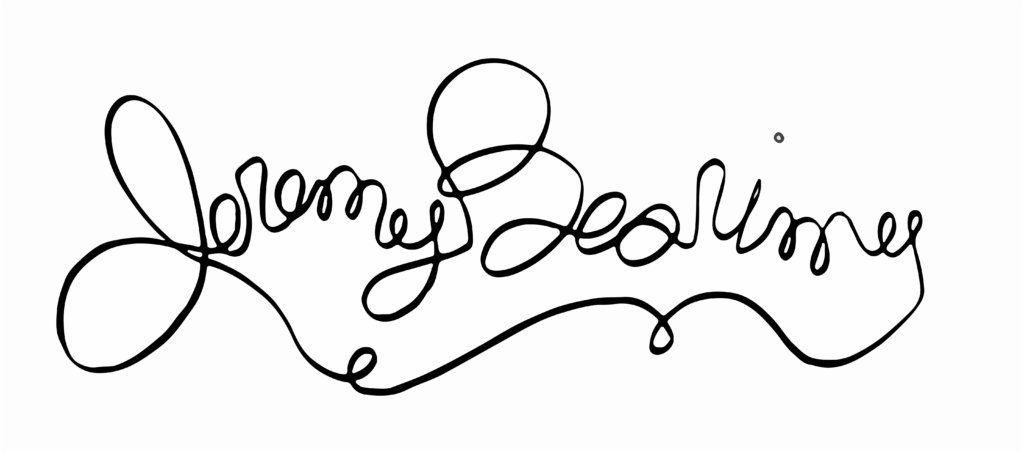
Things in the afterlife don’t happen while things are happening here because while time on Earth moves in a straight line, one thing happens and the next and the next, time in afterlife moves in a “Jeremy Bearimy.”

In the afterlife time doubles back and loops around and ends up looking something like Jeremy Bearimy. This is the timeline in the afterlife. Happens to kinda look like the name “Jeremy Bearimy” in cursive English, so that’s what we call it.

It means that something can happen before the stuff that happened before. Like future can be past, or the past can happen in future while it also happened in past after what has happened in future.

See the dot above the “I” in Bearimy? That’s Tuesdays, and also July, and sometimes it’s never. Occasionally that moment on the Bearimy timeline is the time-moment when nothing never occurs. If you don’t get it, don’t worry. The dot over the I broke Chidi.

If you have no idea what I’m talking about, well, you probably haven’t watched the show The Good Place. Your loss. It’s hilarious, fun, clever, pleasant, thought provoking, and top-rated. I sometimes re-watch some episodes or review some parts.

Now what happened that I thought of this again? Specially the Jeremy Bearimy part? I was visiting Silvia Maggi’s web site and I saw her Jeremy Bearimy page. I immediately recognized the name, that’s why I clicked on it. In her words, the Jeremy Bearimy page is “where time flows differently. Past, present and future happen at the same time. There is no clear structure, and the rules are different.”

I thought it’s exactly like the blogosphere. While Silvia uses the page for CSS experiments and creativity, when we look at our blogs, we get the same feeling. I know I’m sounding weird and I probably make no sense to you but let me explain.

Sometimes I visit my favorite blogs and I read old posts. I read about their concerns at that time, I feel their excitement to announce something, and sometimes I try to imagine myself as a third-person thing when those stuff are happening. It’s like a time travel for me except that it’s already happened, while it is happening at the moment to me, and it will happen again in future if I want to. Kinda like Jeremy Bearimy.

Isn’t it awesome? I love blogging and reading blogs. I love indieweb and people who still are active in old-school communities. I love subscribing to your independent and self-owned blogs. It makes me feel alive, it makes me feel part of a community. When I receive an email from you about a post I published or shared, I truly, and genuinely, get happy and smile.

I sometimes read blog posts about an Apple event or WordPress release, or just some rants or emotional posts about difficulties in their lives and it fascinates me. Not just because they’re old posts but because I get to read them when I want. You can’t do that in social networks such as Twitter or (currently) Mastodon, they’re not designed for that.

But blogs are specially designed and created to have this ability. Most blogs are designed in a way to make oldest posts as easily accessible as the newest ones. It’s one of the basics of blogs and I’m glad it’s like this. I get to experience the past, I get to know about future, and I get everything live, right now, in the easiest way possible. It’s the Jeremy Bearimy, time in afterlife, but we get to experience it now; and that’s awesome.

Social networks addiction

It was when I quit social networks that I knew how they’re truly addicting. I felt something was missing from my life. I missed communicating with friends I made, I missed writing about whatever came to my mind, and I was opening the web sites randomly out of habit only to realize I no longer have anything there.

I signed up again a few times because I couldn’t tolerate the situation. I was too addicted to social networks to be able to function like a normal person. The addiction to constantly writing or reading about random things and being virtually and digitally social prevented me to do anything meaningful, like reading more books, long articles, or even get some shut-eye.

I was an addict. Just like a heroin addict, that can’t function normally in society, I was having problems in society. I couldn’t have a focused meaningful conversation with people, I couldn’t enjoy my environment, I couldn’t enjoy the company of people around me, and I was looking at a screen all the time, even though there was nothing for me there.

Read more… “Social networks addiction”
Video

Numa Numa

In December 2004, 19-year-old Gary Brolsma uploaded a webcam video titled “Numa Numa,” featuring himself lip-syncing to the Romanian song “Dragostea Din Tei” by O-Zone. Hosted initially on Newgrounds.com, Brolsma created the video after watching a cartoon about Japanese cats.

Even before the existence of YouTube, his video exploded one night after Newgrounds featured it on their front page. A couple days later, Brolsma woke up to find news vans from all the major networks parked outside his house, forcing him to explain his sudden Internet fame to his surprised mother.

Behavioral paradoxes!

I think it was first on Joe Rogan’s podcast that I heard someone saying “I don’t believe in ghosts but I would never spend a night in a haunted house” and that made a lot of sense! Me too, actually. I don’t believe in ghosts either but I’m still sometimes scared of ghosts or evil beings.

A month ago I watched the Nun II (2023) movie and later that night I felt scared. I knew there’s no nun waiting for me down the stairs in the kitchen but I still was somehow scared that there may be an evil being there waiting for me. I know that’s ridiculous but I felt it. That feeling was real for me. I even forgot about it the next morning but I know that fear was real.

When I heard the sentence (the one on Joe Rogan podcast), I came to realization that there’s a lot of behavioral paradoxes in our lives without we even noticing them. My fear of the nun was one example but there’s a lot more. For example, we know fast food is bad and it hurts us but we still eat them. We know cigarettes will cause cancer but we still smoke them. We’re afraid of roller coasters, that’s why it causes excitement in us, but we still ride them.

Isn’t that fascinating? We know, deep in our hearts, that something should not be done but against all of our instincts and understandings we do them. What makes us do this? I believe it’s because we enjoy the paradox and we enjoy the feeling of excitement we get from those activities.

Well some activities may not excite us. Smoking, for example, causes real damage on our neurons, that’s why it’s addictive, and we are somehow forced to do them more and more but one who spends a night in a haunted house is not an addict, well unless he does heroin in the house.

The hormones we get from these activities are so strong that we get eager to do them again. Eating at your favorite restaurant may not be an exciting activity but it certainly gives you a joy you don’t experience at other places. And we remember these joys and we repeat them so they become more and more strong.

I used to walk the rain and I always got sick afterwards but the joy I felt from those walks compelled me to do it again. I knew I most-probably will get sick again but I did it anyways. It felt good and I would do it again.

But how does it happen? I know about the hormones and stuff but how does it really happen when we know for a fact that something unpleasant will happen next? When a child decides to disobey parents, while knowing a punishment awaits, what forces him to do it? Why we can’t control ourselves to avoid these situations or practices?

Life would become joyless, robotic. “Equilibrium (2002)” is a movie that shows a world in which having feelings is forbidden, against the law. Even in that movie the main character does against the rules. What made him do this? If I could choose between a joyless yet perfect or an imperfect but joyful worlds, I would definitely choose a joyful world. A world full of excitement, ups and downs, even if it’s imperfect, is much more desirable.

One of my hobbies is to watch football, the real one not the American one. Persepolis and Iran national team play too bad and they are far below the standard. They’re not even average players yet they get paid thousands or millions of dollars to play. In an economy that most people are struggling to afford their basic needs, they get hundreds of thousands of dollars to play football so bad even their greatest fans boo them.

I’ve stopped caring for these football teams long ago and I wish them lose their matches every time, so maybe there will be some reform if they lose a lot. They get paid by the government. Meaning I,  a taxpayer, am paying for these terrible players. That’s one of the things that angers me. However, I still watch them. I follow the matches, I follow their news from time to time and sometimes I get excited when they score.

I even follow the rivals of my favorite teams. I get upset when they win and get happy when they lose. I joke around with fans of the rival team and sometimes discuss the matches, the referees, club situations, and trash-talk each other. Yet deep in my heart and mind I know I wouldn’t pay a dime to these teams. I’ll vote for destruction of these clubs for a penny.

This is one of the behavioral paradoxes I have in my life. Not harmful so much but not joyful either. What makes this happen? It’s one of those paradoxes I can’t understand. How can I hate something so much yet follow it and get excited from time to time? I don’t even forget that I don’t like them. I don’t like fish and I sometimes forget why I don’t like it until I taste it again so I can understand if I have fish for launch sometimes but I don’t understand following my rival teams matches and sometimes even cheer for them. When they score a beautiful goal, or sometimes when they win, I cheer for them. That’s the magic of football I guess.

Humans are full of these behavioral paradoxes. I’m sure I’m not the only one who experiences these and I’m sure there’s a good scientific reason behind all of these. Our body secretes hormones and these affect our behavior, that’s normal, but it still fascinates me a lot. It still makes me wonder about life and our decisions and human willpower.

Clickbait, clickbait everywhere

I’ve been too annoyed with clickbait titles recently that I have stopped visiting certain web sites. Particularly, my favorite sports news web site is now blocked on my computers since they started using clickbait titles. Titles that are designer or written to force you to click on the article.

Titles such as “I’ll leave football” are appearing on that web site and they are specifically designed to make you interested or psychologically manipulate you to click on the link. That’s hurtful. That web site is full of this crap, some like “Qataris printed photo of this defender!” will make you enthusiastic about what is happening.

This should stop. i know it’s hard or even impossible to regulate the Web or force publications, specially digital ones, to follow any instruction regarding how they should write or title their work but we got to do something about this. It’s been annoying me so much and I know I’m not the only one.

The problem is that many of these web sites are monetized using advertisements and more clicks and traffic they get, more money they make. Authors are now forced by their employers to write articles that make visitors stay longer and surf more. That will get them money. More we visit their web sites, more personal data they collect from us. Our Internet behavior, our interests, how we use web sites, and many more identifying information about us can be collected when we surf a web site and spend enough time on them.

When I see a title like “promise that calmed down this coach”, I get interested to see what was that promise and why this coach wasn’t calm, and will be distracted from my original intention of visiting the web site, to get an specific score or watch specific video. At least that’s why I visit sports web sites.

The main problem is how we monetize or commercialize web sites. Our data is so valuable to them that they try anything to get them. For us, it’s a matter of privacy and human rights but for them it’s how they make money and get rich. They don’t care about how you feel or how much you value your human right of privacy. They lobby for more freedom to violate your rights and they even pay billions to smooth the way because they make billions more by selling your private information.

The clickbait matter is just a way to force you spend more time on their web sites and surf more and more you do that, more data they can collect about you and it’ll result in more accurate advertisements towards you which will happen when they have enough personal information of you that they can use to train their machines.

The web site owners may not realize that. Most of them are just simple people who found a way to make money by placing ads on their web sites but it doesn’t matter to users like me, it’ll result in same old privacy violations we’ve been facing for years.

I’ve blocked and disabled some web sites on my computers and I won’t visit them even if I type their address out of old habits. Less privacy violation is always a win. I encourage you to do the same with web sites you know.

Stop building web with JavaScript apps

A not-so-new trend in building web sites is to use JavaScript and force users to launch applications in their browsers in order to be able to access a page. A benefit of that would be that a user who wants to surf different pages on a web site would spend less resources doing so but that’s not always the case.

Most of the times, a user simply wants to receive certain information from a web page. Sometimes we need some questions answered, see a photo, read an article, or download some media. That should be an easy task to do but since the web is now filled with this kind of web sites, that seems to be impossible.

Internet is now filled with web sites that are not simple HTML pages but annoying web programs. They particularly have endless scrolls, fail to show the real material while the program itself is loaded, are stuck on loading animations, fail to give you a universal or accurate URL to the page, and fail to deliver you the material you intended to receive and instead give you unwanted material you never asked for.

From my own experience, these web sites always prioritize their own interests and benefits above yours. You most-probably have visited these kind of web sites and if you ever disable your tracker-blocker, you’ll notice that the advertisements load alongside the program itself, using your computing power and resources, yet the material you wanted keep hiding behind the loading animations.

Quora, a so-called social network of questions and answers, loads a web program on your browser which the material will be loaded inside it. When, sometimes, I visit it to get an answer to a question someones asked it fails to load the full question and answer yet it never failed to show ads or useless parts of its web site.

One other annoying thing is those endless scrolls. Most annoying part of these web sites for me is that they always seem to have a footer where there are “about” and “contact” or “privacy policy” links on them but you can never reach to that. You always scroll until you see the footer but exactly when you want to click on those links, more material will load then you have to scroll down, again, to reach to the footer. Why bother with a footer if you’re not gonna let us use it?

Web is already gone to hell. With all the privacy violations, advertisements, misinformation, censorship, made-up useless standards, and forced designs onto it, it has already become a hell for many users. What we need right now is less programs and more plain polished web pages that simply deliver their material. There’s no need for us to load an entire program in our browser just to find out whether eating an apple is better when peeled or not.

Do something about the war!

While the war between Israel and Palestine is intensifying, I must say that the recent war will only result in more anti-Arab and anti-Semite racism around the world. It had not even been two days since the start of the war that a Egyptian cop shot and killed two Israeli tourists along with their Egyptian guide.

Needless to say the war itself is horrible. As of now more than a thousand people on both sides are dead and thousands more are injured. But perhaps death is not the worst scene we’re watching. Death from war has become something normal in Middle East. We’re used to hearing about war and bombs and military action in the region. The fact that it has become normal is the saddest part.

Nobody around me is shocked by the war. Nobody is terrified about the consequences. Nobody even talks about it. People just casually read the news to each other just like how they talk about the weather. It’s more terrifying than the war itself.

The first day of the war, I’ve seen some disturbing videos. Many people know that I’m not the biggest fan of the Israeli government and I’ve criticized their policies over the years but it doesn’t mean that I support what is happening there. I condemn illegal and inhumane activities of Israeli forces as much I condemn the savagery I see by Hamas.

The first day of the war I’ve seen a video of some Hamas soldiers who killed an Israeli woman soldier, stripped her body naked while carrying her around the city. That’s barbaric. Even in Islam, if we consider them Muslim, respecting the dead is much emphasized. I can’t support any soldier who does that, even if he’s fighting for his freedom.

Some argue that these behaviors are the result of too many years of oppression. But that shouldn’t be the case. A fight for freedom or a war against the oppressor can be justified but some of these actions, such as attacking a music festival and killing two hundred people from many nations, can’t be justified whatsoever.

As someone who is still critical of the Israeli government, I’m deeply concerned that if the current system is overthrown, what and who will replace it. Will we see some new oppressors in the region who will justify their barbaric acts in the name of religion or freedom?

My thoughts and deepest empathy are with Jews and Arabs around the world who most-certainly will be affected by the war whether it’s through the war itself directly or racism coming from angry people. That’s saddening. Many people have lost their lives, probably for nothing, and many more will lose their lives, and it won’t be over soon. Human life has been considered worthless for a long time in Middle East. We have become numbers and statistics. It’s been accepted the way it is inside and outside of the region and the only ones who get hurt are truly innocent people.

Indigenous people of Palestine have been oppressed for many years. Muslims, Jews, Christians, and many other ones are still hurting today, which is coincidentally Indigenous Peoples’ Day, and media and politicians do nothing about it. The importance of Indigenous Peoples’ Day hasn’t been more. While the original holiday is celebrated in United States, it should be considered an opportunity to discuss and act upon the matter we’re facing in Middle East between two groups of indigenous people there, Muslims and Jews.

We must act fast and effective. Humans are not numbers, no matter how much we’re used to losing them.

Training to be less worried

I used to be very relaxed. I still don’t get angry easily or soon. However, lately, I realized that I’m getting worried about little things pretty easy and too much.

Contrary to how I was before, I’m now stressed all the time about little unimportant details or situations I got myself into. I came to realization that I must train myself to deal with what I can’t control.

The past two weeks were stressful for me. I got in some situations that were out of my control and I was mistaken all the time, day and night. It was so intense for me that friends around me were trying to comfort me and they were worried that I get sick from overthinking.

Deep down I knew it was going to be fine and no major disappointment will occur but I still couldn’t control my thoughts and get rid of the overwhelming pressure that I put on myself.

It was at my lowest point at that time that I said to myself I have to put an end to it. It must stop and it must be controlled.

I went to my favorite cafe, ordered my favorite cold-brewed coffee, asked the barista to put on my favorite music, and closed my eyes. I started my training.

It’s simple. It’s what I’m used to do when I can’t sleep. I close my eyes and imagine bright dots. Each dot represents one of my weaknesses or undesirable situations. Then I create an imaginary box and put all of those dots inside the box. Then I try to force those dots out of the box to empty my head from bad thoughts. It may take time but it’s effective, at least for me.

I did it while I was surrounded by my friends and it worked. Proving to myself that I can do it when I want and I can regain control over myself.

I’m back home right now, at the end of my vacation. I’m relaxed, not completely without stress, but not miserable. The amount of stress and pressure on me is back to normal but I didn’t stop my training.

I have to continue my training and I have to have control over what impacts me. I may not be done with the training but I’m already happy.